Watches have come a long way since they were first invented, and one of the most useful improvements is water resistance. After all, water is a vital part of life! However, not all water resistant watches are created equal, and it’s important to understand what your watch can safely handle.
There Are No “Waterproof” Watches
It cannot be stressed enough that no watch is truly “waterproof.” Even those made especially for deep sea scuba divers are “water resistant”—and that’s only if they are operated correctly and receive regular maintenance. That’s because no watch stays water resistant forever, and even a drop of water can wreak havoc on the inside of a watch! No matter what type of movement your watch has—mechanical, quartz or purely digital—water is its worst enemy.
Therefore, if a watch is not stamped “Water Resistant” on its case back or dial, it is highly susceptible to water damage and must be protected from all amounts of liquid at all times. That includes daily scenarios like washing your hands or having the watch on the bathroom counter while you take a hot shower!
Thankfully, the vast majority of watches today are at least somewhat water resistant, but there are many misconceptions surrounding what the ratings actually mean. Today, we hope to clear those up, so let’s dive in!
It’s All About Pressure
Watch water resistance is measured in meters (m), feet (ft), atmosphere (atm), and pressure (bar). The last two units of measurement are clues as to what water resistance actually means: pressure is being measured, not a specific depth.
Now, that might seem confusing. Why say the watch has 30 meter or 100 feet water resistance if it can’t actually withstand those depths? To understand, we need to think about sea level.
Most of us have heard the phrases “above sea level” or “below sea level,” which are simply referring to elevation in relation to the ocean. Elevation is important because the atmosphere around us changes as we descend below or ascend above the sea.
Sea Level = 1 ATM or 1 bar
At sea level, the atmospheric pressure is 1 ATM or 1 bar. As you travel higher, atmospheric pressure decreases, but the opposite is true when descending into water. In fact, the changes underwater are much more dramatic, because water is much more dense than air.
Let’s say you make it to the very top of Mount Everest, which is 8,848 meters (29,029 feet) above sea level. Way up there, the atmospheric pressure is 0.333 ATM. Yet, descending just 10 meters (33 feet) below water brings the pressure up to 2 ATM!
For every 10 meters you go underwater, atmospheric pressure increases by 1 ATM or 1 bar.
So, when a watch is rated with a specific number of feet or meters, it’s not actually referring to depth, but rather the pressure typically experienced at that depth. Why is that distinction important? To find out, we need to look at how watches are assigned their ratings.
Pressure Testing
Once a watch is completely assembled, it’s not actually plunged into the sea to measure its water resistance. In fact, most are never tested in water at all! Instead, the watch is subjected to highly controlled air pressure to see how much it can withstand. This is basically a safer simulation of submersion.
No matter which rating the watch receives, understand that it was determined under factory conditions. The watch was tested brand new, under steady temperatures, and was kept completely still. This is very different from the conditions in a pool or even in your shower.
The simple motion of your arm moving through the water—to say nothing of the impact from diving or jumping into a pool—multiplies the pressure your watch is subjected to. The same is true of a high-powered shower head or even the kitchen faucet. That’s why you can’t take “30 meter water resistance” literally.
With that in mind, let’s see what you can safely do at your watch’s water resistance rating.
Water Resistant
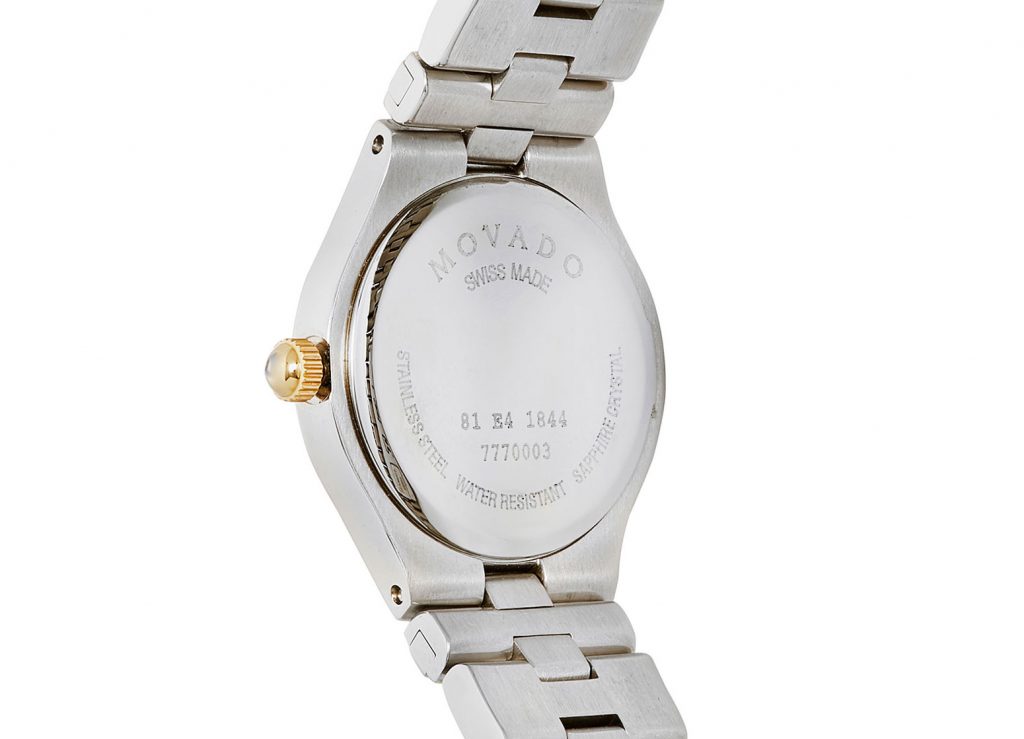
When you come across a watch with the “water resistant” stamp but no rating, you should try to protect it from moisture as much as possible. Unless the manufacturer offers a specific rating elsewhere, there’s no way to know for certain how much it can handle. Nonetheless, it should be able to withstand hand washing or a brief dash through the rain, but it should never be submerged.
Indeed, to be on the safe side, it would best to remove the watch before doing the dishes or taking a hike in a heavy downpour. You might even consider keeping it out of the bathroom too, as steam can sometimes make its way inside the watch and cause damage.
In some ways, you can think of these watches as pieces of fine, delicate jewelry—after all, you wouldn’t wear your pearls in the shower or wash the car wearing your opal ring. If there’s no water resistance rating, always play it safe.
30m – 100ft – 3ATM – 3 bar

These four water resistance ratings are very common, and they all mean the same thing: this watch is “splash resistant.” That means it should be able to withstand splashes of water from washing your hands, walking in the rain or watering your garden, but it should never be submerged in water or worn in the shower.
50m – 160ft – 5ATM – 5 bar

These ratings indicate a little more water resistance than the ones above. You might think of these watches as being “super splash resistant,” as they are probably safe to wear in the shower or during a prolonged, fierce downpour. However, they still should not be purposefully submerged in water. Even though the watch would probably survive an accidentally dip into the sink, we recommend being safe rather than sorry.
100m – 330ft – 10ATM – 10 bar

If you’re looking for a watch you can submerge in water, start at this rating. Here, you can safely swim or snorkel, plus all the activities listed above without worrying! However, these watches might not be able to handle diving off a diving board and are definitely not safe for serious scuba diving. If you plan on doing either of those things, you’ll need to go at least one step up in water resistance.
200m – 660ft – 20ATM – 20 bar

Watches with these ratings are your entry level dive watches or for those who just want some extra peace of mind while swimming. They can better withstand the impact of diving off a diving board and can be worn safely at deeper depths. However, we would still recommend going up another level if you actually plan on doing deep sea scuba diving. Again, always be safe rather than sorry—especially if you love your watch!
300m – 1000ft – 30ATM – 30 bar

Here, you’re safely within professional scuba diving territory, but many people opt for this rating just to swim or surf! The higher the water resistance rating, the more peace of mind you can have doing the activities you enjoy. In fact, professional dive watches can have water resistance ratings over 2000m! How’s that for peace of mind?
Vulnerable Points of Entry

There are two main challenges when it comes to making a watch water resistant: there must be a way to set the watch and a way to open it. Both of these necessities provide points of entry for water.
Crown & Buttons
The vast majority of timepieces have at least one crown, which is typically used to set the watch, and some feature a few buttons (sometimes called pushers). Never operate the crown or buttons in or near water.
Pulling out the crown provides a direct path into the heart of your watch, so you should always make sure it’s completely pushed in or screwed down (if applicable). Even though buttons are typically sealed with gaskets, these seals do not last forever and can cause the same problem.
If you ever notice the crown or buttons becoming loose, you should have your watch serviced as soon as possible. These parts are absolutely critical to maintaining water resistance and are usually the first points of failure.
Case back
Another vulnerable part of every timepiece is the case back, which allows for direct access to the inside of the watch. Some case backs simply snap into place while others are screwed in, but all types use a rubber gasket to ensure water resistance. However, like the gaskets used on buttons, these seals don’t last forever and will need to be replaced eventually.
Under mild conditions, gaskets should last several years, but if you wear your watch in saltwater or subject it to extreme temperatures, they will fail much quicker. To maintain the utmost water resistance, have your gaskets checked every year.
Crystal
Lastly, there’s the crystal, which is the clear covering on the face of the watch. Most watches just have one, but some automatics have a “viewing window” on the case back as well. Most crystals are sealed with gaskets as well, but you also have to watch out for cracks, chips and other damage.
Always have damaged crystals promptly replaced. In addition to letting water inside, a broken crystal can send tiny shards of glass into your watch’s movement, causing costly damage.
The Importance of High Quality, Regular Maintenance

Many people don’t realize that watches need more than just battery changes to stay in tip-top shape. Indeed, if you have a mechanical watch or one with a rechargeable capacitor, you may not realize maintenance is required at all! While all watches should have their movements serviced or at least checked regularly, water resistance is often forgotten until it’s too late.
Seeing moisture under the crystal or watermarks on the dial are very noticeable signs of trouble, but sometimes you may not notice anything until the watch grinds to a halt. Suspecting a dead battery, you might bring it in for a replacement—only to find out the inside is rusted and a costly repair is needed!
Don’t let this happen to your favorite watches. While there are no guarantees, having your watch regularly serviced and following our guidelines above (keep that crown pushed down!) can almost always prevent water damage.
The SJR Difference

Every time we replace batteries or do movement services, we check the key things we’ve gone over with you today. Are the gaskets still in good shape? How about the crystal? Is the crown secure? Are there any signs of current or previous water damage?
When it’s time to close it up again, we make sure it’s sealed up tight—but did you know we can do an extra step at our repair shop? There, we can perform a pressure test, much like the one performed when the watch was made! That way, you can be sure your watch is still as water resistant as its rating indicates. If you’re planning to ever submerge your watch or simply want the peace of mind, do not skip this step. Otherwise, there’s no way to truly know if your watch has become vulnerable.
If you’d like to have a pressure test performed or want your watch completely checked over, you have a few convenient options! First, you can bring your watch into either of our stores, and we’ll send it off to our national repair center. Our friendly sales associates will keep you updated throughout the process, and as soon as it’s ready, you can pick it back up at the store!
Another option is going directly through our repair center. Here, you can mail your timepiece in or even drop by in person. If you just want a battery change and/or pressure test, we can do it while you wait! Otherwise, we’ll let you know when it’s ready for pick up, or we can ship it back to you.
We hope this article has cleared up the confusion around water resistance ratings, but if you have any questions, feel free to contact us!
We hope to serve you soon!