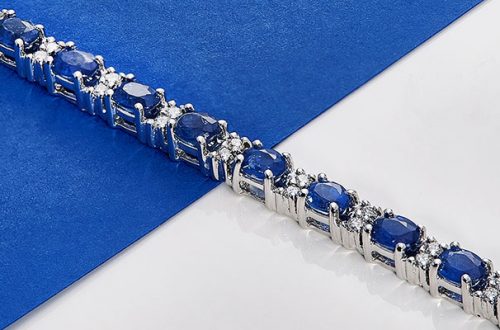
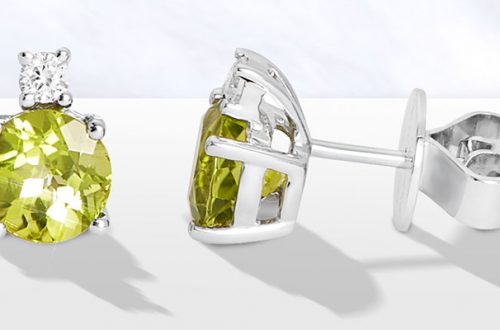
Of all the birthstones, November babies have the most variety to choose from! Not only is citrine an option—a warm, yellow to orange colored gem—but all of topaz’s colors as well! Let’s dive into the similarities and differences between these two stunning stones—and maybe help you decide which one is the right choice for you or that special someone!
Citrine
Citrine may have gotten its name from the French word citron, which means “lemon,” but history isn’t very clear on this. In fact, citrine’s past is sometimes hard to trace because it was often misidentified as orange or yellow topaz! Indeed, all yellow gemstones were simply assumed to be topaz for a long time, but citrine is actually quite distinct.

Citrine is the yellow to orange variety of quartz, which is mined in places like Bolivia, Spain and Mexico, but much of the citrine that is available for purchase today is not naturally occurring. Instead, amethyst (another variety of quartz) is subjected to heat, which will change its purple hue to a sunny yellow-orange! This helps keep citrine abundant, making it an affordable option even at larger carat sizes. Plus, since this gem ranks in at 7 on the Mohs scale of hardness with good toughness, it’s safe for daily wear!
Topaz
For centuries, topaz—specifically the yellow variety—was thought to calm its wearer, dispelling anger and helping to bring about a long life. Indeed, as mentioned above, all yellow gems were once thought to be topaz, and topaz’s other hues were mistaken for other gems too! When modern science came on the scene, gems began to be identified by their chemical makeup, bringing newfound appreciation for this particular stone.

Believe it or not, pure topaz is totally colorless, but it can be tinted by any number of impurities—in the lab or in nature—to yield a rainbow of different colors. One of the most popular shades of topaz today is light blue or aqua, which very rarely occurs in nature. Instead, colorless topaz is subjected to irradiation to produce that particular hue, making it available at an affordable price.
Topaz actually ranks higher on the Mohs scale than citrine—graded as an 8 vs. a 7—but it’s not quite as tough. Some additional care is needed to prevent chipping and cracking of topaz, because intense heat or ultrasonic cleaners can damage the stone and even fade its color. Nonetheless, warm soapy water is safe and easy to use on this beautiful stone.
Take a look at our stunning line of citrine and topaz jewelry or visit one of our stores to see it in person!